Exploring the Depths: A Journey into the Tor Network
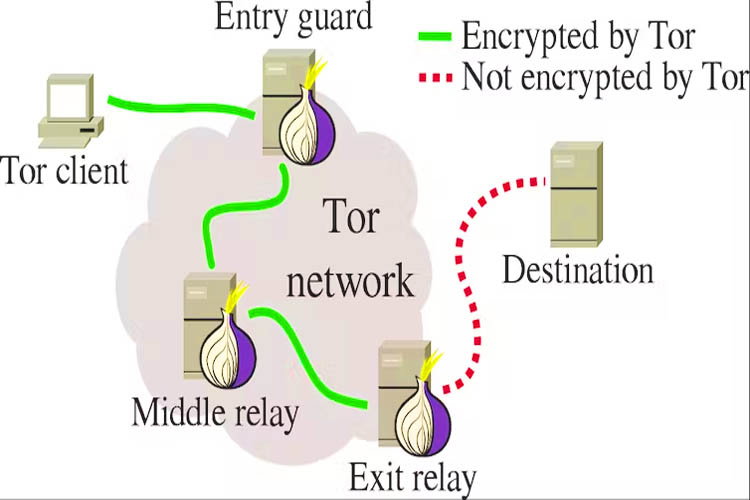
Onion routing is a type of communication technique which has been developed for accessing the Internet anonymously using the Tor network.
Tor stands for The Onion Router and it gives anonymity to the Internet user by helping one access a website or service through the Internet without actually knowing the user’s location.
Here are some key things to know about the Tor network:
Anonymity and Encryption Tor is a service that utilizes a network of volunteer servers to encrypt a user’s internet traffic and route it around the globe in order to conceal a user’s location and traffic from anyone performing network surveillance.
It encrypts messages and bounces such messages through anonymous relays that are run by volunteers scattered across the globe so that the people listening-in would not know who is doing what online. This is very complex as it makes it impossible to identify the source of the connection.
Onion Routing The origin of the name Tor comes from the fact that it uses onion routing which is a way of layering encryption in messages. Unlike an onion where there are many layers and each one reveals the next layer, each relay in Tor only sees one level of the onion.
The data is encoded in different packages as it traverses the Tor network, which effectively protects anonymity. Every relay only decrypts the next layer and passes the message onto the next relay until it reaches the destination.
The Tor Browser Tor Network consists of a tool for creating hidden services, an anonymizing network and a modified version of the Mozilla Firefox browser designed to provide anonymity. Tor browser works by passing the user’s traffic onto the Tor network that cannot fully disclose the location of the user.
All communication is routed through a series of randomly selected intermediate computers called relays that are operated by people from all over the world. It also hinders the site from identifying your computer’s physical location. One of the basic ways that people access the Tor anonymity network is by using the Tor browser.
Accessing Onion Services These anonymous servers enable hiding the actual location of the site – so-called onion services – thanks to the Tor network. Sites whose addresses end in .onion are often reached through the use of the Tor browser.
The addresses consist of cryptographic hashes that are difficult to remove or censure. This makes onion services helpful for people such as whistleblowers and activists who require secure communications on the internet.
Protecting Users' Anonymity Tor network is very stringent in terms of Anonymity of its users. It does not store any personal or other information that could uniquely identify the user browsing its network. This is because the network is not centralized and there would never be a point that would have the capability of revealing the identities of the users in the network.
Not even the volunteers who run the Tor relays would have any knowledge of the users of the software. Nevertheless, there is some danger of individuals’ giving away their identity by disclosing their personally identifiable information through internet usage.
Funding and Organization Tor is a product of the Tor Project – a non-profit organization that develops and supports the Tor software and infrastructure. They provide the service to users free of cost in the entire world. The bulk of the funding for Tor Project comes from the United States government, but other private donations are also received from privacy and human rights activities.
Many people also contribute hardware and time to run Tor relays to contribute to the network.
Use Cases There are many legitimate reasons why internet users would want to remain anonymous or have freedom of accessing sites.
Some examples of who may use the Tor network include:
- People in oppressive countries who disagree with their governments or want to raise the alarm about corruption or other wrongdoings can reach out to the others without state persecution. This includes accessing banned information as well as organising people.
- Journalists may collect more confidential information and communicate with their sources of information anonymously and securely. Newspapers such as the New York Times and investigative journalism centers such as ProPublica have implemented Tor into their websites to safeguard for whistle-blowers.
- Tor is not a safe place for security experts because the police also use it for cybercrime investigations. For example, the FBI uses the Tor Hidden Service to investigate criminal activities in the Dark Net.
- The domestic abuse victims can surf the Internet from the safety of their home without fear that their abusers will find out. It is important to know that the majority of such sites are available in the Tor network as onion services.
- Business people travelling to foreign nations can access their corporate Intranet and securely hide data that is unrevealed to the general public who may be using the public networks.
- A typical Tor user is just an average internet user who does not like big companies or the government spying on his web activities. Tor can stop profiling and mass surveillance of people.
Criticisms of Tor Tor has also been used in illegal activities and activities that are performed with the desire of remaining anonymous. Tor is applied to open up the Dark Web Dark Web pages and explore the black markets to buy drugs, guns, and other illegal products.
Even with this, Tor claims that it is essential to provide privacy for all and as much as they can try to limit illegal activities on their systems as much as possible without compromising anonymity. Speed and performance are other issues associated with telework. Tor traffic is always slower than regular internet traffic since it follows a larger path and thus takes longer to reach its destination.
Yet the software, and the routing algorithms, keep on increasing speeds. For those who want even more privacy and confidentiality, use of the encryption and anonymity qualities makes much slower speeds tolerable.
The Future of Tor Tor Project also goes on advancing the software and network for improving the security and usability for the increasing number of the users in the world. The public is becoming more worried about privacy violations resulting from the lack of regulation for data storage and web tracking which further promotes the use of VPN.
Tor will still remain relevant and useful to many people in the world because of the tools provided that make it possible to bypass censorship and communicate anonymously.
Create Free Hidely Bitcoin Wallet With inbuilt tor support
#TorNetwork #OnlinePrivacy #CyberSecurity #AnonymousBrowsing #InternetFreedom #PrivateBrowsing #Encryption #DigitalPrivacy #DarkWeb #WebAnonymity #DataProtection #StayAnonymous #PrivacyMatters #SecureBrowsing #ProtectYourData #OnlineAnonymity #BrowseSafely #TorBrowser #StaySafeOnline #OpenSourceTechnology